
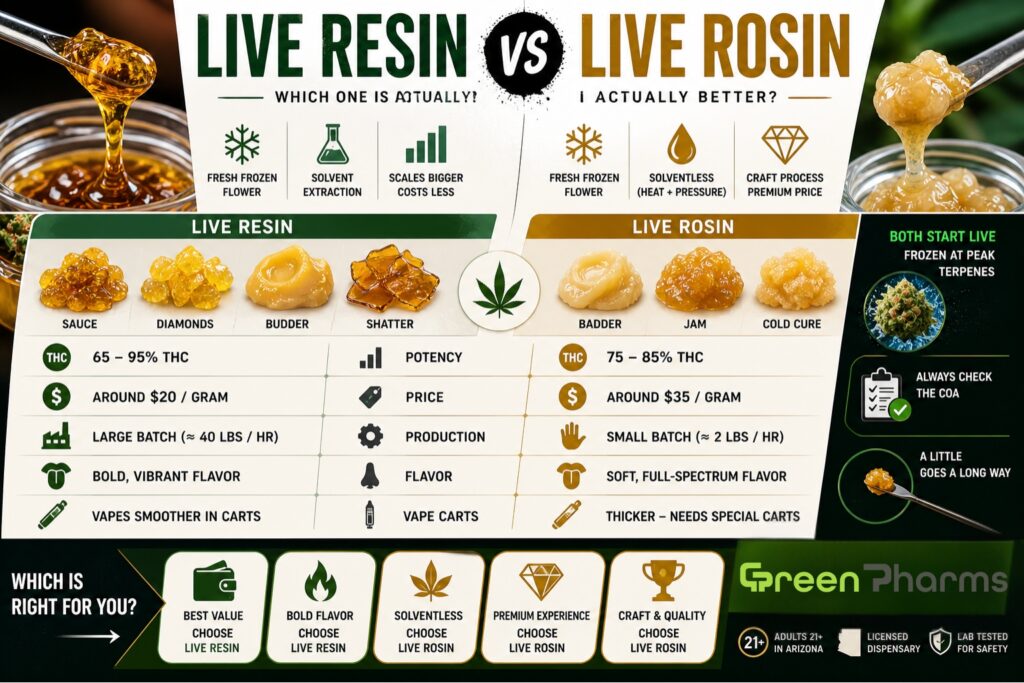
- Live resin uses solvents like butane. Live rosin is solventless.
- Both start from fresh frozen cannabis flower for maximum terpene retention.
- Live rosin costs more because it takes more time and labor.
- Live resin usually tests higher in THC potency than rosin.
- Neither is universally “better.” It depends on flavor and budget.
- Always check the COA before buying any concentrate.
Introduction
One vowel. That’s the only difference between resin and rosin on the menu. The price tag tells a different story.
If you’ve stood at a dispensary case wondering why one jar costs twice as much, you’re not alone. The live resin vs live rosin question trips up new and seasoned shoppers alike. Both come from fresh frozen flower. Both pack serious terpenes. So why the gap?
This guide breaks it down honestly. No jargon, no fluff. We’ll walk you through how each one is made, how they taste, what you’ll pay, and which one fits your style. You can also explore our full lineup of cannabis products to see how concentrates fit into the bigger menu.
This article is for informational purposes only. It is not medical advice. Cannabis products are for adults 21 and older in Arizona.
Here’s where it gets interesting.
What “Live” Actually Means
The word “live” gets thrown around a lot. It does not mean the cannabis is alive. It means the flower was frozen right after harvest.
Most cannabis is dried and cured for weeks. That process loses terpenes. Terpenes are the volatile oils that give each strain its smell and flavor. They start evaporating the moment buds hit air, light, and heat.
Fresh frozen flowers skip that loss. According to industry reporting on fresh frozen flower, freezing within minutes of harvest preserves moisture and locks in monoterpenes at peak levels. Peer-reviewed cannabis research backs this up. Frozen extraction methods retain cannabinoid and terpene profiles that traditional drying destroys.
So both live resin and live rosin start from the same place. The split happens next.
But here’s the part most guides skip.
How Live Resin Is Made
Live resin is a solvent-based concentrate. The flower is fresh frozen. Then it gets loaded into a closed-loop extraction system.
Butane or propane is pushed through the plant material under pressure. The solvent strips out cannabinoids and terpenes from the trichomes. Trichomes are those tiny resin glands you see glistening on quality flower.
After extraction, the solvent is purged in a vacuum oven. What remains is a thick, fragrant concentrate. It can come out as sauce, sugar, diamonds, or budder.
Solvent-based extraction has one underrated benefit. Processors can filter out pesticides, heavy metals, and other contaminants during the run. That is why a clean Certificate of Analysis (COA) is non-negotiable. Every reputable Arizona dispensary should show you one.
Live resin scales well. A modern hydrocarbon setup can process around 40 pounds per hour. That efficiency keeps the price reasonable.
Now flip the process around.
How Live Rosin Is Made
Live rosin uses zero solvents. It uses pressure and heat. That is it.
The fresh-frozen flower first becomes ice-water hash. Workers stir frozen buds in icy water. The cold snaps the trichomes off the plant. Then, mesh bags filter the trichomes by size. The result is bubble hash.
That hash gets dried and pressed between heated plates. Heat melts the resin. Pressure pushes it out. The golden, sticky output is live rosin.
The whole process is slow. Throughput is closer to two pounds per hour, not forty. Yields are smaller. Labor is higher. That is the price math behind the higher shelf cost.
Many connoisseurs love rosin because no solvent ever touched the plant. The flavor often feels rounder and more “true to the flower.”
Insider Tip: Solventless Doesn’t Always Mean Cleaner
Most shoppers assume solventless rosin is automatically purer than resin. The truth is more nuanced. Hydrocarbon extraction allows processors to filter out pesticides, heavy metals, and lipids. Rosin pressing skips that step entirely. If the starting flower had any contamination, it can ride straight into the final rosin. The lesson: starting flower quality matters more than the extraction method. Always check the COA, no matter which one you grab.
So which one wins on the menu?
Live Resin vs Live Rosin Side-by-Side
Here is the quick comparison. For more depth, this side-by-side breakdown from Weedmaps covers extra angles.
| Factor | Live Resin | Live Rosin |
| Extraction method | Hydrocarbon solvents (butane, propane) | Heat and pressure only |
| Starting material | Fresh frozen flower | Fresh frozen flower |
| Solvent in final product | None (purged and tested) | Never used |
| Typical THC range | 65 to 95 percent | 75 to 85 percent |
| Texture | Sauce, diamonds, budder, shatter | Badder, jam, cold cure |
| Price per gram | Lower (around $20) | Higher (around $35) |
| Production scale | Large batch | Small batch craft |
| Flavor style | Bold, vibrant | Soft, full-spectrum |
Numbers don’t tell the whole story.
Which One Should You Pick
The honest answer is, it depends. Here is a simple way to choose.
- You want bold flavor at a fair price. Go live resin. It is potent, accessible, and tests clean when sourced from a trusted dispensary.
- You read every ingredient label. Go live rosin. No chemical solvent ever touches the plant. Just water, ice, heat, and pressure.
- You vape on the go. Live resin carts often run more smoothly with standard cartridges. Live rosin carts cost more and may need specialized atomizers.
- You dab on the weekends. Either works. Try both and let your palate decide.
- You’re brand new to concentrates. Start with a smaller live resin gram. Go slow. A little goes a long way.
If you want to dig deeper into what creates each strain’s character, our terpene profile guide is a solid next stop. Curious about THC, CBD, and the rest of the cast? Check the cannabis compounds breakdown.
Got questions? Most folks do.
FAQ
Is live rosin stronger than live resin? Is rosin stronger? Not usually. Live resin typically tests between 65 and 95 percent THC. Live rosin lands around 75 to 85 percent. Resin often wins on raw potency, but rosin fans value flavor over numbers.
Are live resin and live rosin safe to consume? Are both safe? Yes, when properly tested. Live resin solvents are purged and verified by lab testing. Live rosin uses no solvents at all. Always check the Certificate of Analysis before buying.
Is live rosin worth the higher price? Is it worth it? For flavor chasers, yes. Live rosin costs more because the process takes longer and yields less. You pay for craft and a fully solventless product.
Are live resin vape carts different from live rosin carts? Are the carts different? Yes. Live resin flows easier in cartridges. Live rosin carts often need different atomizers because rosin is thicker. Both deliver fresh frozen flavor.
Is live resin or live rosin better for beginners? Is one better for beginners? Live resin is usually the easier option to start with. It costs less and works smoothly in vape carts. Try a small dose first and see how you feel.
The Bottom Line on Live Resin vs Live Rosin
Both start “live.” Both honor the plant. They split at the extraction step, and that split shapes everything from price to texture to flavor.
Live resin is your high-flavor, high-availability pick. Live rosin is the craft, solventless option for shoppers who want zero chemicals in the chain. Neither is universally better. The right one is the one that fits your taste and budget.
This article is for educational purposes. It is not medical advice. Cannabis is for adults 21 and older in Arizona, and licensed dispensaries operate under rules set by the Arizona Department of Health Services. Consult a medical professional before making personal health decisions.
Find Your Match at GreenPharms
At GreenPharms, our team helps you find the right concentrate for your taste and budget. Stop by our Mesa shop or browse our full lineup of cannabis products online at greenpharms.com/cannabis-products. We’re a family-owned Arizona dispensary, and we treat every shopper like a neighbor.