
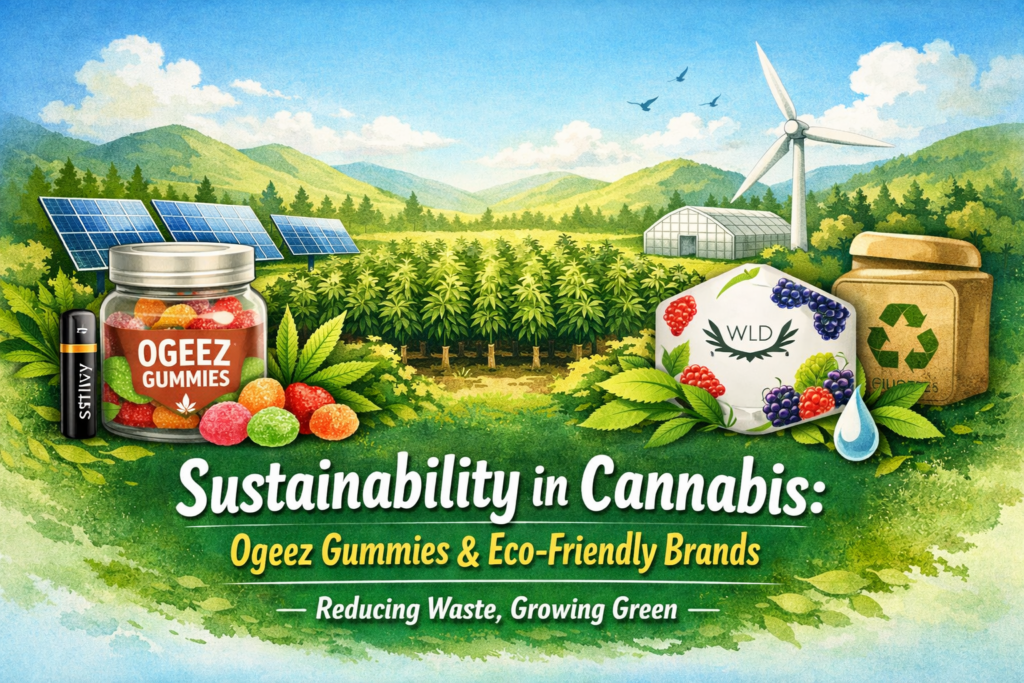
The cannabis industry is experiencing a green revolution—and we’re not just talking about the product itself. As consumer awareness grows around environmental impact, leading cannabis brands are stepping up with innovative sustainability practices that reduce waste, improve product quality, and protect our planet for future generations.
Disclaimer: The information provided in this blog is for educational purposes only and is not intended as medical advice. Cannabis products have not been evaluated by the FDA and are not intended to diagnose, treat, cure, or prevent any disease. Please consult with a qualified healthcare professional before using cannabis, especially if you have underlying health conditions or are taking medications.
From eco-conscious packaging solutions to regenerative cultivation methods, the cannabis industry is proving that exceptional quality and environmental responsibility can go hand in hand. Whether you’re enjoying Ogeez gummies, exploring Stiiizy marijuana products, or savoring Wyld gummies, understanding the sustainability efforts behind your favorite brands helps you make informed, responsible choices.
The Environmental Challenge Facing the Cannabis Industry
The cannabis industry faces unique environmental challenges that responsible brands are working diligently to address. Cannabis cultivation requires significant resources, with indoor growing operations consuming substantial amounts of water and energy. According to research from the Lawrence Berkeley National Laboratory, indoor cannabis production can account for one percent of total electricity use in some states where it’s legal.
Beyond cultivation, packaging waste has emerged as a particularly pressing concern. Regulations in many states mandate child-resistant packaging and individual product wrapping, which has historically resulted in excessive plastic use. Single-use containers, mylar bags, and multiple layers of protective materials have contributed to a growing waste problem within the industry.
Water consumption presents another significant challenge. Traditional cannabis cultivation can require substantial irrigation, particularly in regions experiencing drought conditions. The environmental impact extends to pesticide use, carbon emissions from climate-controlled facilities, and the disposal of plant waste after harvest.
However, forward-thinking brands are recognizing these challenges as opportunities for innovation. Companies producing popular products like Ogeez gummies and Stiiizy marijuana are implementing comprehensive sustainability initiatives that address these concerns head-on. The shift toward environmental responsibility isn’t just good ethics—it’s becoming a competitive advantage that resonates with conscious consumers.
Eco-Friendly Packaging Innovations Transforming the Industry
Packaging represents one of the most visible areas where cannabis brands can demonstrate their environmental commitment. Progressive companies are moving away from excessive plastic and embracing materials that minimize environmental impact while maintaining the safety and compliance standards required by law.
Biodegradable and compostable packaging options are gaining traction across the industry. Materials derived from hemp fiber, mushroom mycelium, and other plant-based sources are replacing traditional plastics in many product lines. These innovative alternatives break down naturally without leaving harmful residues in landfills or oceans.
Recyclable packaging has become another focus area for sustainability-minded brands. Companies are designing containers using materials like glass, aluminum, and recyclable plastics that can be processed through standard municipal recycling programs. Some brands have even implemented take-back programs, allowing customers to return packaging for proper recycling or reuse.
Brands like Wyld have been recognized for their commitment to reducing packaging waste while maintaining product integrity. The trend extends across product categories, from flower containers to the packaging used for popular edibles like Ogeez gummies. Many companies are also reducing overall packaging volume, eliminating unnecessary layers and adopting minimalist designs that use less material overall.
Child-resistant packaging, while necessary for safety, doesn’t have to be wasteful. Innovative designs now incorporate child-safety features using sustainable materials, proving that compliance and environmental responsibility aren’t mutually exclusive. Some brands are developing reusable containers with child-resistant closures that consumers can refill with future purchases.
Clean Cultivation Practices: Growing Cannabis Responsibly
Sustainable cannabis begins long before products reach dispensary shelves—it starts in the cultivation facility. Leading brands are revolutionizing how cannabis is grown, focusing on practices that conserve resources, minimize environmental impact, and produce superior quality products.
Organic cultivation methods eliminate synthetic pesticides, herbicides, and fertilizers that can harm ecosystems and potentially affect product purity. According to the USDA National Organic Program, organic farming practices focus on soil health, biodiversity, and ecological balance. While cannabis cannot currently receive official USDA organic certification due to federal regulations, many cultivators follow organic principles to ensure cleaner products.
Regenerative agriculture takes sustainability even further by actively improving soil health with each growing cycle. These practices include composting plant waste, using cover crops between harvests, and implementing no-till farming methods that preserve beneficial microorganisms in the soil. Regenerative techniques not only reduce environmental impact but often result in plants with more robust terpene profiles and cannabinoid content.
Water conservation has become a priority for responsible cultivators. Advanced irrigation systems with precision sensors deliver exactly the amount of water plants need, reducing waste by up to 60 percent compared to traditional methods. Some facilities capture and recycle water runoff, while others are exploring closed-loop hydroponic systems that dramatically reduce overall water consumption.
Energy-efficient cultivation is transforming indoor growing operations. LED lighting technology uses significantly less electricity than traditional high-intensity discharge lamps while producing optimal light spectrums for plant growth. Many facilities are also incorporating renewable energy sources like solar panels and wind power to reduce their carbon footprint.
At GreenPharms, our vertically integrated approach allows us to maintain quality control from seed to sale while implementing sustainable practices throughout our cultivation facility. This commitment ensures that the products we carry meet both our quality standards and environmental responsibility goals.
Responsible Sourcing and Supply Chain Transparency
Sustainability extends beyond cultivation to encompass the entire supply chain. Conscious cannabis brands are increasingly scrutinizing where their materials come from and how products move from farm to consumer, creating transparency that builds trust with environmentally aware customers.
Supply chain transparency allows consumers to understand the journey their products take from cultivation to purchase. Brands that prioritize sustainability often provide detailed information about their sourcing practices, cultivation methods, and manufacturing processes. This openness enables consumers to make informed decisions aligned with their values.
Local sourcing reduces transportation emissions and supports regional economies. Many dispensaries, including GreenPharms, prioritize partnering with local cultivators and manufacturers, minimizing the carbon footprint associated with long-distance shipping. This approach also ensures fresher products and stronger community connections.
Ethical labor practices are an often-overlooked aspect of sustainability. Responsible brands ensure fair wages, safe working conditions, and respectful treatment throughout their supply chains. The cannabis industry workforce continues to grow, and progressive companies recognize that environmental sustainability must include social responsibility.
Third-party testing and quality assurance serve dual purposes: they protect consumer safety while verifying that products meet sustainability claims. Reputable brands provide certificates of analysis (COAs) that confirm product potency, purity, and the absence of harmful contaminants. This transparency reinforces the connection between sustainable practices and superior product quality.
How Popular Brands Are Leading the Sustainability Movement
Several cannabis brands have emerged as sustainability leaders, demonstrating that environmental responsibility and commercial success can thrive together. These companies are setting industry standards and inspiring others to follow their example.
Wyld gummies have built a reputation around sustainability and outdoor adventure. The brand uses real fruit ingredients, avoids artificial flavors, and partners with organizations focused on environmental conservation. Their commitment to reducing packaging waste has earned recognition from environmentally conscious consumers nationwide.
Stiiizy marijuana products come from a brand that has implemented various sustainability initiatives, including efforts to reduce packaging waste and improve energy efficiency in their operations. As one of the industry’s recognizable names, Stiiizy’s sustainability commitments help normalize eco-friendly practices across the market.
Ogeez gummies represent another example of brands incorporating quality ingredients and responsible manufacturing practices. The focus on creating exceptional products while minimizing environmental impact reflects a growing industry trend toward balancing consumer satisfaction with ecological responsibility.
Beyond specific brands, the broader movement toward sustainability in cannabis is creating positive change industry-wide. Trade organizations and advocacy groups are developing sustainability certifications and best practice guidelines that help consumers identify environmentally responsible products. This collective effort is transforming cannabis from a resource-intensive industry into a model of sustainable production.
The Connection Between Sustainability and Product Quality
Many consumers don’t realize that sustainable cannabis practices often directly enhance product quality. The connection between environmental responsibility and superior cannabis isn’t coincidental—it’s fundamental to how plants grow and develop.
Plants cultivated in healthy, living soil rich with beneficial microorganisms develop more complex terpene profiles compared to those grown with synthetic nutrients. These terpenes don’t just provide aroma and flavor—they contribute to the entourage effect, where various cannabis compounds work synergistically. Research published in the British Journal of Pharmacology examines how terpenes may enhance or modulate the effects of cannabinoids.
Organic cultivation methods that avoid synthetic pesticides result in cleaner products free from harmful chemical residues. Testing data consistently shows that organically grown cannabis contains fewer contaminants, providing peace of mind for health-conscious consumers. This purity is particularly important for those using cannabis for wellness purposes.
Sustainable energy practices in cultivation facilities allow for better environmental control, resulting in more consistent growing conditions. This consistency translates to more predictable product potency and quality, helping consumers know exactly what to expect from their purchases.
The attention to detail required for sustainable cultivation often indicates a broader commitment to excellence. Brands that invest in environmental responsibility typically apply the same care and precision to every aspect of their operations, from cultivation to processing to final product formulation.
What Consumers Can Do to Support Sustainable Cannabis
As a cannabis consumer, your purchasing decisions have real power to drive industry change. Supporting sustainable brands sends a clear market signal that environmental responsibility matters, encouraging more companies to adopt eco-friendly practices.
Look for products from brands with documented sustainability commitments. Many companies publish sustainability reports or prominently feature their environmental initiatives on packaging and websites. When shopping at GreenPharms in Mesa, our knowledgeable staff can provide information about the sustainability practices of various brands we carry.
Ask questions about cultivation methods, packaging materials, and supply chain practices. Retailers appreciate engaged customers who care about these issues, and your inquiries help communicate consumer priorities. Understanding where your cannabis comes from and how it’s produced empowers you to make choices aligned with your values.
Properly dispose of cannabis packaging by recycling materials when possible. Many municipalities have specific guidelines for recycling different types of materials, and following these practices ensures that recyclable packaging actually gets recycled. Some dispensaries offer recycling programs for cannabis packaging that isn’t accepted in standard curbside pickup.
Support brands that give back to environmental causes. Many cannabis companies partner with conservation organizations or donate portions of their profits to environmental initiatives. Your purchases with these brands extend your positive impact beyond reducing your personal footprint.
Consider product formats that minimize waste. For example, purchasing larger quantities less frequently can reduce packaging waste compared to buying many small packages. Similarly, refillable vaporizer cartridges produce less waste than disposable options.
The Future of Sustainability in Cannabis
The trajectory of sustainability in cannabis points toward increasingly innovative solutions and broader industry adoption of eco-friendly practices. As consumer demand for sustainable products grows and technology advances, the industry is positioned for transformative change.
Carbon-neutral cultivation is becoming an achievable goal rather than a distant aspiration. Some facilities are already offsetting their emissions through renewable energy, carbon credits, and other initiatives. As technology improves and becomes more affordable, carbon neutrality may become the industry standard rather than an exception.
Circular economy principles are gaining traction in cannabis. This approach views waste as a resource, finding uses for every part of the plant and every byproduct of cultivation and processing. Plant waste can become compost, stems and stalks can be processed into hemp fiber, and even wastewater can be treated and reused.
Biotechnology and agricultural innovation promise even more sustainable cultivation methods in the future. Researchers are developing cannabis varieties that require less water, resist pests naturally without pesticides, and produce higher yields in smaller spaces. These advances will make sustainable cultivation more accessible to more producers.
Industry-wide sustainability certifications may emerge as the market matures. Just as organic certification provides consumers with a trusted standard for food products, cannabis-specific sustainability certifications could help shoppers identify products that meet rigorous environmental criteria. Several organizations are already working to develop these standards.
Consumer education will play a crucial role in the sustainable cannabis future. As more people understand the environmental impact of their cannabis choices and the alternatives available, demand for sustainable products will continue to grow. This education includes understanding how to evaluate brand claims and identify genuinely sustainable practices versus greenwashing.
GreenPharms’ Commitment to Sustainability
At GreenPharms, sustainability isn’t just a marketing buzzword—it’s a core value that guides our operations from cultivation to customer service. As a family-owned, vertically integrated Arizona dispensary, we take seriously our responsibility to provide quality cannabis products while protecting the environment that sustains us.
Our Chino Valley cultivation facility implements water conservation practices and energy-efficient growing methods that reduce our environmental footprint. By maintaining control over our cultivation process, we ensure that sustainability standards are met at every stage of plant development. This commitment to responsible growing practices results in products we’re proud to share with our customers.
We carefully select the third-party brands we carry based not only on product quality but also on their environmental commitments. From Ogeez gummies to other popular products, we prioritize partnerships with brands that share our values regarding sustainability and responsible production. Our team stays informed about industry innovations in sustainable packaging and cultivation to make the best recommendations for environmentally conscious consumers.
Transparency is fundamental to our approach. We believe customers have the right to know where their cannabis comes from and how it’s produced. Our knowledgeable staff is always available to answer questions about product sourcing, cultivation methods, and sustainability practices. We provide access to detailed product information and testing results, empowering customers to make informed decisions.
Our commitment extends beyond our own operations to the broader community. We recognize that true sustainability requires collective action, and we’re proud to be part of an industry increasingly focused on environmental responsibility. By choosing to shop at GreenPharms, you’re supporting a business that prioritizes both quality cannabis and ecological stewardship.
Frequently Asked Questions
What makes cannabis packaging sustainable?
Sustainable cannabis packaging uses materials that minimize environmental impact, such as biodegradable, compostable, or recyclable materials. This includes packaging made from hemp fiber, plant-based plastics, recycled paper, glass, and aluminum. The best sustainable packaging also reduces overall material use while maintaining necessary safety features like child-resistant closures. Some brands are developing reusable containers that consumers can refill, further reducing waste.
How does organic cultivation improve cannabis quality?
Organic cultivation methods eliminate synthetic pesticides, herbicides, and fertilizers, resulting in cleaner products free from chemical residues. Plants grown in healthy, living soil develop more complex terpene profiles, which enhance flavor, aroma, and potentially the overall effects through the entourage effect. Organic methods also promote stronger, more resilient plants that may produce higher-quality cannabinoids. While cannabis cannot currently receive official USDA organic certification due to federal regulations, many cultivators follow organic principles to ensure superior product purity.
Are Wyld gummies sustainably produced?
Wyld has earned recognition for their commitment to sustainability through several initiatives. The brand focuses on using real fruit ingredients, avoids artificial flavors, and has worked to reduce packaging waste. Wyld also partners with environmental organizations and incorporates eco-friendly practices throughout their production process. Their outdoor adventure brand identity aligns with their environmental values, making them a popular choice among sustainability-conscious consumers.
What should I look for when choosing sustainable cannabis products?
Look for brands that transparently share information about their cultivation methods, sourcing practices, and environmental initiatives. Indicators of sustainability include organic or regenerative cultivation, minimal and recyclable packaging, third-party testing for purity, and partnerships with environmental organizations. Don’t hesitate to ask your budtender about a brand’s sustainability practices. At dispensaries like GreenPharms, staff can provide insights into which products come from environmentally responsible producers.
How does water conservation work in cannabis cultivation?
Water conservation in cannabis cultivation involves several techniques designed to minimize waste while maintaining optimal growing conditions. Precision irrigation systems use sensors to deliver exactly the amount of water plants need, reducing waste by up to 60 percent. Some facilities capture and recycle runoff water, while others use closed-loop hydroponic systems that dramatically reduce overall consumption. Drought-resistant cannabis varieties and moisture-retaining growing media also contribute to water conservation efforts.
Can sustainable practices reduce cannabis costs?
While implementing sustainable practices often requires upfront investment, many ultimately reduce operational costs through improved efficiency. Energy-efficient lighting and climate control lower electricity bills, water conservation reduces utility expenses, and waste reduction minimizes disposal costs. Some sustainable practices may result in slightly higher product prices initially, but as more brands adopt these methods and technology improves, costs are expected to decrease. Many consumers view the modest price difference as worthwhile given the environmental and quality benefits.
Conclusion
The movement toward sustainability in cannabis represents more than just an environmental trend—it’s a fundamental shift in how the industry operates and how consumers make purchasing decisions. From innovative packaging solutions to clean cultivation practices and responsible sourcing, cannabis brands are proving that exceptional quality and ecological stewardship go hand in hand.
Whether you’re enjoying Ogeez gummies, exploring Stiiizy marijuana products, or trying Wyld gummies, understanding the sustainability efforts behind your favorite brands empowers you to make informed, responsible choices. Every purchase becomes an opportunity to support companies that prioritize environmental responsibility alongside product excellence.
At GreenPharms, we’re committed to this sustainable future through our cultivation practices, brand partnerships, and ongoing education efforts. We believe that cultivating a different kind of care means caring for our customers, our community, and our planet. As the industry continues evolving, we’re excited to be part of the positive change toward a more sustainable cannabis market.
The future of cannabis is green in every sense of the word. By supporting brands with genuine sustainability commitments and asking questions about where your products come from, you’re helping drive the industry toward more responsible practices. Together, we can enjoy the benefits of cannabis while protecting the environment for generations to come.
Disclaimer: This article is intended for educational and informational purposes only. The statements made regarding cannabis and its effects have not been evaluated by the Food and Drug Administration. Cannabis products are not intended to diagnose, treat, cure, or prevent any disease or condition. The effects of cannabis can vary significantly between individuals based on factors including tolerance, metabolism, and product potency. Please consult with a qualified healthcare professional before using cannabis products, particularly if you are pregnant, nursing, have a medical condition, or are taking medications. Always consume cannabis responsibly and in accordance with state and local laws.