

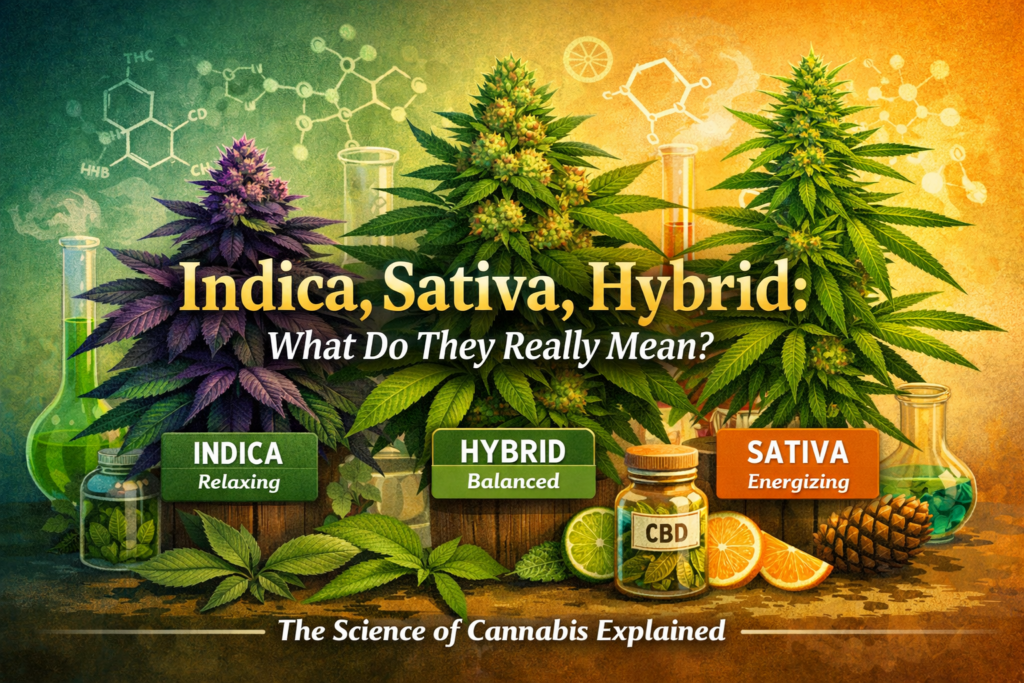
Walk into any dispensary, and you’ll likely hear these three words: indica, sativa, and hybrid. For years, these labels have guided cannabis consumers in their purchasing decisions. Indica for relaxation, sativa for energy, hybrid for something in between—or so the story goes. But as cannabis science advances, we’re learning that these traditional categories tell only part of the story.
This article is for educational purposes only and is not intended to diagnose, treat, cure, or prevent any disease. The statements made have not been evaluated by the FDA. Always consult with a healthcare professional before using cannabis, especially if you have any underlying health conditions or are taking medications.
At GreenPharms, we’re committed to helping our customers make informed choices. Understanding what these labels really mean—and what they don’t—empowers you to select products that align with your needs and preferences. Let’s explore the origins of these classifications, what modern research tells us, and how to navigate your cannabis journey with confidence.
The Historical Roots of Cannabis Classification
The terms “indica” and “sativa” didn’t originate in dispensaries or among cannabis enthusiasts. They come from 18th-century botanical science, when scientists were first attempting to classify the cannabis plant.
In 1753, Swedish botanist Carl Linnaeus published Species Plantarum, classifying all cannabis under one group: Cannabis sativa L. The term “sativa” derives from the Latin word sativum, meaning “cultivated.” Linnaeus observed tall, fibrous plants that were being grown for hemp and other agricultural purposes.
Later, in 1785, French biologist Jean-Baptiste Lamarck identified a second distinct species after examining cannabis samples from India. He named this shorter, bushier plant Cannabis indica, with “indica” meaning “from India.” Lamarck noted that these plants were stouter with broader leaves and possessed more psychoactive properties than their taller cousins.
These botanical distinctions were based purely on physical characteristics—plant height, leaf shape, and geographic origin. The scientists weren’t studying effects on human consciousness or therapeutic potential. They were simply categorizing plants based on what they could observe and measure at the time.
Traditional Understanding of Indica, Sativa, and Hybrid
Over the decades, the botanical terms evolved into shorthand for describing cannabis effects. Here’s how the traditional framework typically breaks down:
Indica Flower
Indica strains have long been associated with deeply relaxing, sedating effects. Users often describe the experience as a “body high” that promotes physical comfort and tranquility. Many people reach for indica flower in the evening or before bed, as these strains are believed to support rest and relaxation.
Physical characteristics of indica plants include shorter, bushier stature with broad, dark green leaves. They originated in cooler climates with shorter growing seasons, such as the Hindu Kush mountain range spanning Afghanistan, Pakistan, and Northern India. Indica plants typically produce denser buds and have shorter flowering cycles than sativa plants.
Popular indica strains include Afghan Kush, Granddaddy Purple, and Ice Cream Cake.
Sativa Flower
In contrast, sativa strains are traditionally associated with more uplifting, energizing effects. The experience is often described as a “head high” that may enhance creativity, focus, and social engagement. Sativa flower has been the go-to choice for daytime use and activities requiring mental clarity.
Sativa plants grow tall—sometimes reaching heights of 6 feet or more—with thin, finger-like leaves. These plants thrived in warm, humid climates near the equator, including regions of Southeast Asia, Central America, Africa, and portions of Western Asia. Sativa plants typically have longer flowering periods and produce lighter, airier buds than indica varieties.
Popular sativa strains include Jack Herer, Sour Diesel, and Green Crack.
Hybrid Strains
Hybrid strains represent crossbreeds between indica and sativa plants. By combining genetics from both species, cultivators can create strains with diverse characteristics and effects. Hybrids may be indica-dominant, sativa-dominant, or balanced (50/50).
The first widely recognized hybrid strain is believed to be Skunk #1, created in the late 1960s by crossing Columbian Gold (sativa) with Afghan (indica). This legendary strain demonstrated that breeders could intentionally combine desirable traits from different cannabis varieties.
Today, hybrids dominate the market. They allow consumers to select products that match their specific needs—whether that’s the relaxation of indica with a touch of sativa’s mental clarity, or the energy of sativa tempered by indica’s physical comfort.
Popular hybrid strains include Blue Dream, GMO Cookies, and Pineapple Express.
What Modern Science Tells Us
Here’s where the story gets interesting: recent scientific research reveals that the indica-sativa-hybrid framework isn’t as reliable as many people believe.
The Genetic Reality
Multiple studies have examined the genetic makeup of cannabis plants labeled as indica or sativa. The findings are surprising. Research published in various scientific journals shows that strains labeled “indica” are often genetically just as similar to strains labeled “sativa” as they are to other indica strains. In other words, the labels don’t consistently correlate with distinct genetic lineages.
After decades of crossbreeding and hybridization, pure indica and pure sativa genetics are extremely rare in today’s market. Most modern cannabis strains—even those marketed as pure indica or sativa—contain genetic material from both ancestral types.
Why the Labels Persist
If the science doesn’t support the indica-sativa distinction, why do these terms remain so prevalent? There are several reasons. First, the labels provide a familiar, accessible starting point for conversations between budtenders and customers. Second, they create a shorthand that’s easier to navigate than complex chemical profiles. Third, deeply ingrained beliefs and anecdotal experiences reinforce the traditional framework, even when scientific evidence suggests otherwise.
The challenge is that these labels can be misleading. Two strains labeled “indica” might produce very different experiences, while an indica and a sativa could have surprisingly similar effects.
The Real Determinants of Cannabis Effects
So if indica, sativa, and hybrid labels don’t reliably predict how cannabis will affect you, what does? The answer lies in chemistry—specifically, cannabinoids and terpenes.
Cannabinoids: The Primary Players
Cannabinoids are the chemical compounds produced by cannabis plants that interact with your body’s endocannabinoid system. While cannabis contains more than 100 different cannabinoids, a few stand out:
THC (Tetrahydrocannabinol) is the primary psychoactive compound responsible for the “high” associated with cannabis. Different strains contain varying levels of THC, which significantly influences potency and effects.
CBD (Cannabidiol) is non-intoxicating and has gained attention for its potential therapeutic properties. The ratio of THC to CBD in a strain plays a crucial role in the overall experience.
Minor cannabinoids like CBG (cannabigerol), CBN (cannabinol), and CBC (cannabichromene) are present in smaller amounts but contribute to the plant’s overall profile. Research into these compounds is ongoing.
Terpenes: The Aromatic Influencers
Terpenes are aromatic compounds found in cannabis and countless other plants. They’re responsible for the distinctive scents and flavors of different strains—the piney notes, citrus aromas, earthy undertones, and spicy accents you might notice.
But terpenes do more than just smell good. Research suggests they interact with cannabinoids to shape the overall effects, a phenomenon known as the “entourage effect.” Different terpene profiles may influence whether an experience feels relaxing, energizing, focusing, or euphoric.
Common terpenes in cannabis include:
Myrcene is the most abundant terpene in many cannabis strains. It has an earthy, musky aroma and is also found in hops and lemongrass. Myrcene-dominant strains are often associated with relaxing, sedative qualities.
Limonene provides citrusy, lemon-like aromas and is found in citrus fruit peels. Strains high in limonene may promote elevated mood and mental clarity.
Caryophyllene delivers spicy, peppery notes and is unique among terpenes because it also acts as a cannabinoid, interacting with the body’s CB2 receptors.
Pinene produces the fresh scent of pine trees and may support alertness and memory retention.
Linalool offers floral, lavender-like aromas and is associated with calming, stress-relieving properties.
Humulene has earthy, woody notes similar to hops and is often found alongside caryophyllene.
The specific combination and concentration of terpenes in a strain—its terpene profile—provides more meaningful information about potential effects than indica or sativa labels alone.
Understanding Chemovars
The cannabis industry is increasingly moving toward a more scientific classification system based on chemical composition rather than morphology or geographic origin. This approach uses “chemovars” (chemical varieties) to categorize cannabis.
Chemovars are typically classified by their cannabinoid ratios:
Type I (High-THC): More than 0.3% THC and less than 0.5% CBD. These are the most common recreational strains.
Type II (Balanced): Significant amounts of both THC and CBD, offering a more balanced experience.
Type III (High-CBD): High CBD with minimal THC, often chosen for therapeutic applications with minimal intoxication.
Some researchers go further, incorporating terpene profiles into the classification. For example, organizing strains by their dominant terpenes—myrcene-dominant, limonene-dominant, or caryophyllene-dominant—can provide more accurate guidance than indica-sativa labels.
How to Choose the Right Flower
Given what we now know, how should you approach selecting cannabis flower? Here are some practical strategies:
Ask Better Questions
Instead of simply asking for indica, sativa, or hybrid, try asking about specific characteristics. Consider questions like: What strains do you have that are high in CBD? Which products have calming terpene profiles? What’s available with uplifting, citrus-forward aromas?
This approach encourages more meaningful conversations with knowledgeable budtenders who can guide you based on actual chemical composition and customer experiences.
Pay Attention to Lab Results
At GreenPharms, we believe in transparency and quality. Many products now come with lab results showing cannabinoid percentages and terpene profiles. Take the time to review this information. Over time, you’ll start to recognize patterns in what works for you.
If you find a strain you love, note its THC percentage, CBD content, and dominant terpenes. This information will help you identify similar products in the future, even if they have different names or are labeled differently in terms of indica, sativa, or hybrid.
Start Low and Go Slow
Regardless of labels or chemical profiles, individual responses to cannabis vary widely. Factors like body weight, metabolism, tolerance, and even your current mood can influence your experience.
When trying a new strain, start with a lower dose and give yourself time to assess the effects before consuming more. This approach minimizes the risk of overconsumption and helps you find your optimal dosage.
Consider Your Needs and Context
Think about your intention for using cannabis. Are you seeking relaxation after a long day? Creative inspiration for a project? Physical comfort to support rest? Relief from stress or discomfort? The context matters.
Also consider the time of day and your plans. A strain that feels perfect for Saturday morning creativity might be less ideal right before bed, and vice versa.
Trust Your Own Experience
While chemical profiles and lab results provide valuable data, your personal experience is the ultimate guide. What works wonderfully for one person might not suit another, even if they choose the same strain.
Keep a simple journal or mental notes about what you try, how much you consume, and how it makes you feel. Over time, you’ll develop a clearer understanding of what works for you, independent of marketing labels.
The Role of Rosin vs. Resin
While we’re discussing cannabis classifications, it’s worth addressing another common point of confusion: rosin versus resin. These terms refer to cannabis concentrates rather than flower, but they’re part of the broader conversation about cannabis products and quality.
Rosin is a solventless concentrate created by applying heat and pressure to cannabis flower, hash, or kief. Because no chemical solvents are used, many consumers appreciate rosin for its purity and natural terpene preservation. The process can even be done at home with the right equipment, though professional-grade rosin presses produce more consistent results.
Resin (particularly live resin) is made using chemical solvents like butane or propane to extract cannabinoids and terpenes from fresh-frozen cannabis material. After extraction, the concentrate is thoroughly purged of solvents. Live resin often has slightly higher THC levels due to the efficiency of solvent-based extraction.
Both rosin and resin can be made from any type of flower—indica, sativa, or hybrid. The extraction method affects the concentrate’s texture, flavor profile, and purity, but the effects still depend primarily on the cannabinoid and terpene content of the starting material.
At GreenPharms, we carry a variety of concentrates to match different preferences and needs. Whether you prefer solventless rosin or high-potency resin, our team can help you understand the options.
The GreenPharms Commitment to Quality and Education
As a family-owned and operated company, GreenPharms is dedicated to more than just selling cannabis. We’re committed to cultivating understanding, transparency, and trust.
We recognize that navigating the cannabis landscape can feel overwhelming, especially as scientific understanding evolves and traditional frameworks are challenged. That’s why education is at the heart of what we do.
Every product we offer undergoes rigorous third-party testing to verify potency, purity, and safety. We make lab results readily available so you can make informed decisions. Our knowledgeable staff members are trained to discuss not just indica, sativa, and hybrid labels, but also cannabinoid ratios, terpene profiles, and consumption methods.
We maintain high standards for cultivation, processing, and quality control. From the moment seeds are planted to the final product you take home, we prioritize excellence at every step. Our facilities follow best practices for sustainable and responsible cannabis production.
Whether you’re shopping at our Mesa dispensary or browsing our online menu, you’ll find detailed product information designed to empower your choices. We’re here to answer questions, provide guidance, and support your cannabis journey.
Looking Toward the Future
The cannabis industry is evolving rapidly. As legalization expands and research accelerates, our understanding of this remarkable plant continues to deepen. The shift from indica-sativa-hybrid labels to chemovar classifications represents a broader movement toward science-based, personalized approaches to cannabis.
In the coming years, we may see even more sophisticated tools for matching consumers with ideal products. Imagine apps that track your experiences, genetic testing that reveals your cannabinoid metabolism, or AI-powered recommendations based on comprehensive chemical profiles and user feedback.
What won’t change is the fundamental importance of education, transparency, and quality. These principles will remain central to responsible cannabis use and industry practices.
Frequently Asked Questions
Q: Should I completely ignore indica, sativa, and hybrid labels?
Not necessarily. While these labels aren’t scientifically precise, they can still provide a rough starting point for conversations and initial exploration. Just recognize their limitations and be willing to dig deeper into cannabinoid and terpene profiles for more accurate guidance.
Q: How can I tell if a strain will help me relax or give me energy?
Look at the terpene profile rather than just the indica-sativa label. Strains high in myrcene often promote relaxation, while those rich in limonene or pinene may feel more energizing. However, individual responses vary, so personal experimentation is key.
Q: Are there any pure indica or pure sativa strains left?
True landrace strains—pure indica or sativa varieties that developed naturally in specific regions—are rare in today’s commercial market. Most modern strains are hybrids containing genetic material from both types, even if they’re marketed as pure indica or pure sativa.
Q: What’s more important: THC percentage or terpene profile?
Both matter, but for different reasons. THC percentage indicates potency and intensity, while terpene profiles influence the quality and character of the experience. A high-THC strain with a terpene profile you don’t enjoy might be less satisfying than a moderate-THC strain with appealing terpenes.
Q: Does the way cannabis is consumed affect how indica or sativa labels apply?
Yes. Consumption method influences onset time, duration, and intensity of effects. For example, edibles take longer to kick in and last longer than smoking or vaping. However, the underlying chemical profile still matters more than indica-sativa labels regardless of how you consume.
Q: How does GreenPharms help customers navigate these choices?
Our knowledgeable staff is trained to discuss cannabis beyond simple indica-sativa categories. We provide detailed product information including cannabinoid content and terpene profiles, offer personalized recommendations, and maintain high transparency standards with third-party lab testing. Visit our Mesa location or explore our educational resources to learn more.
Conclusion: Making Informed Choices
The traditional indica, sativa, and hybrid labels have served as useful guides for cannabis consumers for decades. They provide an accessible entry point into conversations about cannabis and help organize the overwhelming variety of products available.
However, as we’ve explored, these categories are based on botanical characteristics rather than chemical composition or effects. Modern research reveals that cannabinoid ratios and terpene profiles are far more reliable indicators of how a particular strain might affect you.
The good news? You don’t need to become a chemist to make better cannabis choices. Start by paying attention to lab results when available. Have deeper conversations with budtenders about what you’re seeking. Keep track of what works for you personally. And remember that your own experience is the best teacher.
At GreenPharms, we’re here to support your journey toward more informed, intentional cannabis use. Whether you’re seeking relief, relaxation, creativity, or simply a better understanding of this fascinating plant, we’re committed to providing the highest-quality products, transparent information, and expert guidance.
These statements have not been evaluated by the Food and Drug Administration. Cannabis products are not intended to diagnose, treat, cure, or prevent any disease. Please consult your healthcare provider before using cannabis, particularly if you have underlying health conditions, are pregnant or nursing, or are taking medications. Cannabis affects everyone differently, and individual results may vary.Visit GreenPharms today to explore our carefully curated selection of flower, concentrates, edibles, and more. We’re cultivating a different kind of care—one conversation, one product, one customer at a time.