
Key Takeaways
• Rosin is solventless — made with heat and pressure, zero chemicals.
• Resin (including live resin) uses solvents like butane or propane.
• Rosin typically preserves a purer, strain-true terpene profile.
• Live resin may test higher in THC due to efficient solvent extraction.
• Hash rosin is widely considered the most premium solventless concentrate.
• Neither is objectively better — it comes down to what you value most.
| ⚠ 21+ only. For adult use under Arizona law. This article is for educational purposes only and does not constitute medical advice. Consult a licensed healthcare provider before using cannabis for any health-related purpose. |
Two Letters. A World of Difference.
Rosin. Resin. One letter apart. Completely different products. If you’ve stood at a display case wondering which concentrate to grab, you’re not alone — this is one of the most common questions in the cannabis world. And the answer actually matters for your experience.
The short version: rosin is made without solvents, while resin uses chemical solvents like butane or propane to pull cannabinoids from the plant. That single difference ripples out into everything — flavor, purity, price, and potency. If you want to understand what’s inside your cannabis products, this breakdown will make the choice a lot easier.
GreenPharms carries both, and our team gets asked about this every day. Here’s the honest, no-fluff breakdown you need.
Ready to see how they actually stack up? Let’s start with the basics.
What Is Rosin?
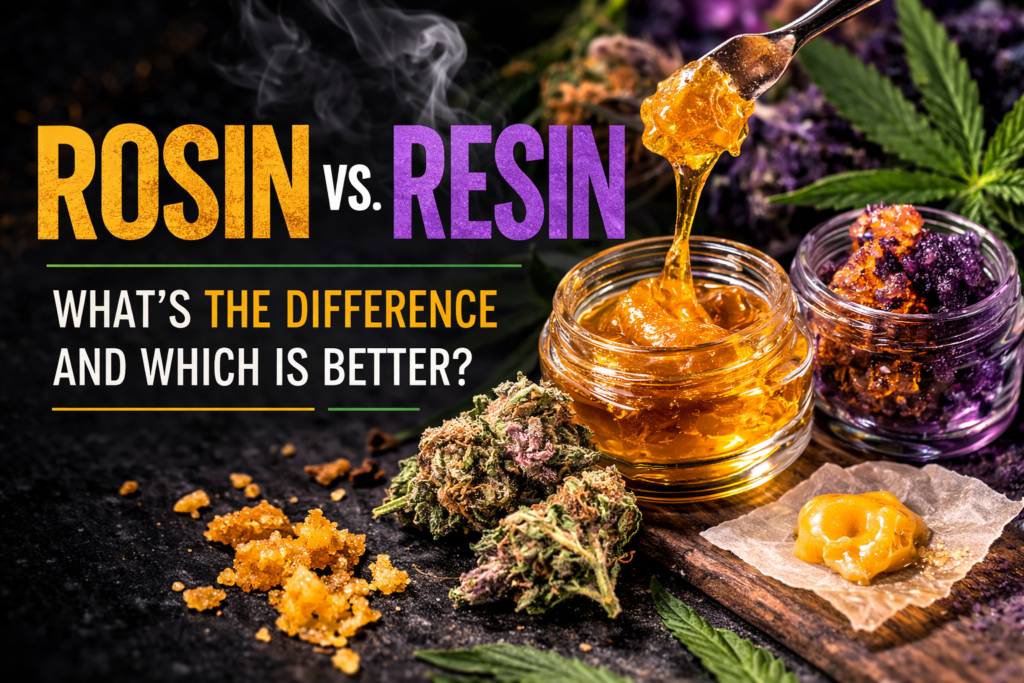
Rosin is a solventless cannabis concentrate. No butane. No propane. No chemical solvents at all.
It’s made by applying heat and pressure to cannabis material — flower, kief, or bubble hash — and squeezing out a golden, sticky oil packed with cannabinoids and terpenes. That’s it. The process is clean, transparent, and remarkably simple.
The result is a full-spectrum concentrate that captures the plant as nature made it. Because no chemicals are involved, the native terpene profile survives largely intact. What you taste is the actual strain, not a processed version of it.
A PMC study on rosin tech confirmed that consumers consistently describe rosin as “natural,” “clean,” and “pure” — and those aren’t just marketing words. The solventless process genuinely eliminates the risk of residual chemical contamination in the final product.
Types of Rosin
• Flower rosin — pressed directly from cured cannabis buds.
• Hash rosin — pressed from bubble hash made with ice water. This is the premium tier.
• Live rosin — made from fresh-frozen cannabis. Captures the peak terpene moment right at harvest.
Each step up the ladder means more labor, more precision, and a richer final product. Hash rosin — especially live hash rosin — is the gold standard in the solventless world.
Curious how this compares to what’s in a cartridge or a pre-roll? The difference goes deeper than you think.
What Is Resin (and Live Resin)?
Resin is a broad term. In casual conversation, “resin” sometimes refers to the sticky black buildup left in a pipe after smoking. But in the concentrate world, it usually means live resin — a high-end solvent-based extract.
Live resin is made from fresh-frozen cannabis that goes straight from harvest into a hydrocarbon extraction process using butane or propane. The solvents pull cannabinoids and terpenes from the plant material, which is then discarded. The solvent is later purged — removed — leaving behind a potent, flavorful concentrate.
Because fresh-frozen plant material is used, live resin preserves a robust terpene profile. The flash-freezing stops terpene degradation at the moment of harvest. As GreenPharms explains on its cannabis concentrates page, solvent-based extraction “strips the terpene oils and cannabinoids from the plant material” — efficiently and at scale.
Common Live Resin Formats
• Sauce — a terpene-rich, applesauce-like consistency with cannabinoid crystals.
• Diamonds — pure THC-A crystals separated during extraction.
• Badder/butter — a whipped, malleable concentrate.
• Cartridges — live resin oil in a vape cart, one of the most popular formats.
Live resin often tests higher in THC because solvent extraction is exceptionally efficient at pulling cannabinoids from plant material. But higher THC isn’t the whole story — and that’s where things get interesting.
The Terpene Factor: Why “Lower THC” Doesn’t Mean Less Satisfying
Here’s something the THC percentage label won’t tell you.
Rosin typically tests between 70–85% THC. Live resin can hit 65–95%. On paper, live resin looks like the potency winner. But experienced users and cannabis researchers increasingly point to the entourage effect as the real measure of a concentrate’s impact.
| 🔬 Expert Insight: The Entourage Effect Changes the MathMost consumers fixate on THC percentage. But research tells a more nuanced story. A peer-reviewed study published in Scientific Reports found that cannabis terpenes can “boost cannabinoid activity” — meaning the whole plant profile may matter more than any single number.Rosin, because it’s solventless, tends to preserve a fuller, more intact terpene fingerprint than solvent-extracted concentrates. Some researchers believe this makes rosin feel more balanced and more characteristic of the original strain — even at a slightly lower THC percentage.A comprehensive review in PMC exploring the entourage effect noted that “the entirety of the effect is greater than the sum of its contributing parts.” That’s the case rosin lovers make: you’re not just getting THC, you’re getting the whole plant working together.The science is still evolving, and individual responses vary significantly. But if you’ve ever noticed that two concentrates with similar THC levels feel completely different — terpenes are likely why. |
Research into terpene-cannabinoid interaction is ongoing. A 2021 Scientific Reports study found specific terpenes — including linalool, geraniol, and beta-pinene — may enhance cannabinoid activity. A separate PMC review of cannabis entourage effects explored this further, noting that terpene-cannabinoid interactions are a growing focus of cannabis science.
For a deeper look at the terpenes in your products, explore GreenPharms’ terpene profile education page.
Now let’s put these two concentrates side by side so you can see exactly how they compare.
Rosin vs. Resin: Side-by-Side Comparison
Here’s how rosin and live resin stack up across the categories that actually matter to a consumer:
| Category | Rosin | Live Resin |
| Extraction Method | Heat + pressure only (solventless) | Chemical solvents (butane/propane) |
| Starting Material | Flower, hash, or kief | Fresh-frozen cannabis |
| THC Range | 70–85% | 65–95% |
| Terpene Preservation | Excellent — full native profile | Very good — may alter slightly |
| Solvent Residue Risk | None | Minimal if properly purged |
| Flavor Profile | Pure, strain-true, rich | Bold, intense, complex |
| Texture | Buttery, waxy, or saucy | Saucy, crystal-forward |
| Price Point | Higher (labor-intensive) | Moderate |
| Best For | Purity seekers, connoisseurs | Potency seekers, value hunters |
A quick note on that THC range: numbers vary based on starting material, extraction precision, and individual batch quality. The ranges above reflect industry averages. Always check the Certificate of Analysis (COA) for the specific product you’re buying.
The comparison is clear — but which one actually belongs in your session?
Which One Should You Choose?
There’s no universal answer. The right pick depends on you.
Choose Rosin If:
• You want the cleanest, most natural product possible.
• You care deeply about authentic strain flavor and terpene expression.
• You prefer to avoid solvent-based products.
• You’re willing to pay a premium for craft-quality, small-batch extraction.
Choose Live Resin If:
• You want the highest possible THC output from your concentrate.
• You love bold, intense flavor from fresh-frozen cannabis.
• You’re budget-conscious but still want a premium product.
• You prefer cartridges — live resin flows well and is popular in vape formats.
What About Hash vs. Rosin?
Bubble hash (ice water hash) sits between flower and rosin. It’s solventless like rosin, but it hasn’t been pressed yet. Some consumers prefer to dab hash directly; others want the additional processing step that gives rosin its refined consistency. Hash rosin — bubble hash that’s been pressed — is the most labor-intensive and widely praised solventless option.
Learn more about how all concentrate types compare on GreenPharms’ cannabis education hub.
Frequently Asked Questions
Is rosin better than live resin?
It depends on your priorities. Rosin is considered cleaner and purer because it’s solventless. Live resin may offer slightly higher THC and a bolder flavor from fresh-frozen material. Neither is objectively better — your preference for purity vs. potency will guide the choice.
Is live resin safe to consume?
Live resin made by licensed producers is purged of residual solvents before sale. Products sold at licensed Arizona dispensaries must meet state testing standards. Always check the COA (Certificate of Analysis) for any concentrate to confirm solvent levels are within acceptable limits.
Is rosin more expensive than live resin?
Yes, typically. Rosin requires more labor-intensive extraction with lower yields per batch. Hash rosin — especially live hash rosin — is the most premium and expensive tier. Live resin is generally more affordable while still delivering a high-quality experience.
Are rosin and resin the same thing?
No. Rosin is a solventless concentrate made with heat and pressure. Resin — specifically live resin — uses chemical solvents like butane for extraction. They share some similarities in appearance and use, but the production process and resulting purity profiles are distinct.
Is rosin considered full-spectrum?
Yes. Because rosin uses no chemical solvents and relies on heat and pressure alone, it retains the full range of cannabinoids and terpenes from the source material. This makes it a naturally full-spectrum product, preserving the plant’s complete chemical fingerprint.
The Bottom Line
Rosin and resin aren’t competitors — they’re two different tools. Rosin gives you purity, authenticity, and a terpene profile that’s true to the plant. Live resin gives you efficient extraction, bold flavor, and often a higher THC ceiling. Knowing the difference means you can walk into a dispensary and pick with confidence.
If you care about what’s in your product and how it was made, rosin is hard to beat. If you want maximum potency and a more accessible price point, live resin earns its place.
Either way, the best choice is an informed one — and now you’ve got the information.
| ⚠ Closing Disclaimer: This article is intended for adults 21 and older in compliance with Arizona law. The information provided is educational and does not constitute medical advice. Cannabis affects everyone differently. If you are considering cannabis for health-related purposes, please consult a licensed healthcare provider before use. |
Find the Right Concentrate at GreenPharms
GreenPharms is a family-owned Arizona dispensary that believes you deserve to know exactly what you’re buying. Our team is on the floor every day to answer questions just like these — without the sales pressure.
Browse our current concentrate selection or swing by and let us walk you through the options. Visit greenpharms.com to shop online or check today’s deals. We’re open 9AM–9PM at 7235 E Hampton Ave, Mesa, AZ.
Cited Sources
| # | Source | Topic Supported | Section |
| 1 | PMC — Rosin Tech Study | Consumer perception of rosin as clean/natural/safe | What Is Rosin? |
| 2 | Scientific Reports (Nature) — Terpene Study | Terpenes may boost cannabinoid activity / entourage effect | Expert Insight |
| 3 | PMC — Entourage Effect Comprehensive Review | Synergistic cannabis terpene-cannabinoid interactions | Expert Insight |
| 4 | GreenPharms — Cannabis Products Page | Solventless vs. solvent-based extraction description | What Is Resin? |
| 5 | GreenPharms — Terpene Profile | Terpene education for consumers | Terpene Factor |