

Key Takeaways
- Arizona SB 1725 would make “excessive” marijuana smoke a public nuisance offense.
- The bill targets smoke or odor that crosses onto a neighbor’s property.
- Penalties could include fines up to $750 per violation under the revised bill.
- “Excessive” has been loosely defined — enforcement could be subjective.
- Your rights under Prop 207 still apply; the bill has not become law yet.
- Consuming cannabis legally, discreetly, and indoors remains your best protection.
Disclaimer: This article is for informational purposes only. It does not constitute legal or medical advice. Cannabis is legal for adults 21 and older in Arizona under Proposition 207. Always consult a licensed attorney or medical professional for guidance specific to your situation.
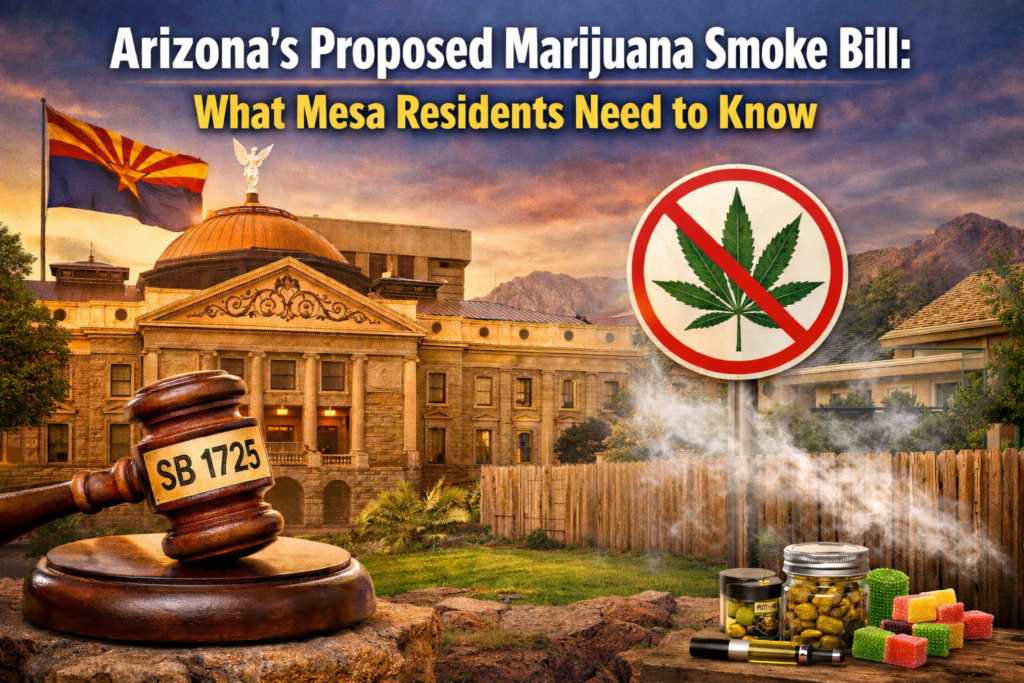
A new bill is moving through the Arizona Senate , and if you consume cannabis in or around your home, you need to know about it. SB 1725 could make “excessive” marijuana smoke and odor a public nuisance, even if you’re using cannabis legally on your own property. That’s not a small thing.
The good news? It hasn’t passed yet. And there are smart, simple steps you can take right now to protect your rights and stay on the right side of the law. Whether you’re a medical patient or a recreational consumer, staying informed is the first move. If you want to explore your cannabis options in the meantime, GreenPharms is here to help.
Here’s what’s actually happening , and what it means for you.
What Is Arizona SB 1725?
State Senator J.D. Mesnard introduced SB 1725 after noticing marijuana smoke drifting into his family’s home in Chandler. He said he couldn’t keep his windows open and didn’t want his kids exposed to the smell or effects. When he filed the bill, his phone lit up with messages from residents sharing similar experiences.
The bill, as originally written, would have classified the creation of excessive marijuana smoke and odor as a criminal offense. After pushback in committee, lawmakers scaled the bill back to a civil nuisance framework, moving it away from criminal charges , but the penalties remain real.
Under the revised version, a violation is now classified as a petty offense. Each day of non-compliance after a court order counts as a separate offense.
There’s also a companion resolution , SCR 1048 , that is identical to the bill but would send the question directly to voters in November rather than letting the legislature decide alone.
Both measures passed the Senate Judiciary and Elections Committee in a 5-2 vote. They’re moving forward.
What Does “Excessive” Actually Mean?
This is where things get murky , and where your rights matter most.
The word “excessive” was never defined in the original bill. That drew immediate criticism from cannabis advocates, civil liberties groups, and legal experts. The ACLU of Arizona argued the vague language opens enforcement to exactly the type of subjective judgment that bias research shows leads to disparate outcomes.
After committee pressure, an amendment was added. The revised definition describes excessive smoke as “airborne emissions resulting from the burning, heating or vaporizing of marijuana or marijuana products” that are “capable of being detected by a person on the private property of another person.”
In plain English: if your neighbor can smell it from their yard, it could qualify.
Under a further amendment, a violation would only occur if the conduct is intentional or if the person knowingly and substantially interferes with a neighbor’s enjoyment of their property. A notice and a five-day cure period are also required before enforcement can begin.
What Are the Potential Penalties?
The original bill referenced county jail time. The revised version softens that , but it’s not nothing.
| Penalty Type | Details |
| Fine | Up to $750 per occurrence |
| Additional Offenses | Each day of non-compliance after a court order is a separate offense |
| Property Lien | Cost of abatement can become a lien on your property if the government or HOA acts |
| Classification | Petty offense (civil, not criminal) under the revised bill |
Neighbors would first need to file a complaint with local officials before taking state-level action. You’d also receive notice and have five days to address the issue before any formal action could proceed.
That’s meaningful protection. But it’s not immunity.
How Does This Fit With Arizona’s Current Cannabis Laws?
It’s important to remember what voters decided not so long ago.
Arizona Proposition 207 — the Smart and Safe Arizona Act — passed in November 2020 with about 60% of the vote. It legalized recreational cannabis for adults 21 and older. Adults can legally possess up to one ounce of marijuana or five grams of concentrate, and can grow up to six plants at home.
Prop 207 also explicitly stated that marijuana odor could no longer be used as reasonable suspicion of a crime. SB 1725 is, in many ways, a direct challenge to that principle.
NORML State Director Julie Gunnigle pointed out that Arizona voters already made their intentions clear when they passed Prop 207. The bill’s sponsor even acknowledged that his proposal might need to go to voters , which is why SCR 1048 was introduced alongside the legislative bill.
Public consumption of cannabis remains illegal under Prop 207. That’s always been the rule. But in your own home, your rights have been protected. SB 1725 is attempting to carve into that space.
Expert Insight
The Smell Test Is Harder to Fight Than You Think
One thing that gets missed in this debate: cannabis odor is notoriously difficult to contest in court. Unlike noise violations , which can be measured in decibels , smell is entirely subjective. There are no calibrated instruments. No standardized thresholds. A neighbor’s complaint becomes the primary evidence. Legal experts note that even with the revised “substantial interference” language, the burden of proof rests on the accused to show the smoke was not excessive. That flips the normal legal standard. For medical patients who rely on inhalation as their primary consumption method, this creates real exposure. Switching to edibles, capsules, or tinctures , all available at GreenPharms , can eliminate smoke and odor concerns entirely, and may be worth a conversation with your healthcare provider.
What This Means for Medical Marijuana Patients
Medical patients carry specific protections , and specific risks.
Under the revised bill, a court may consider possession of a valid registry identification card as a mitigating factor , but it does not provide full immunity. The law still allows a nuisance finding even for lawful users.
Demetri Downing, founder of the Marijuana Industry Trade Association, said the people he’s most worried about aren’t recreational consumers. He’s concerned about medical patients who have therapeutic reasons for cannabis use and whose rights could be infringed.
Medical patients in Arizona can possess up to 2.5 ounces and grow up to 12 plants. But none of that matters if a neighbor calls in a complaint about the smell.
If you’re a medical patient, now is a good time to think about your consumption method. Non-smoking formats , edibles, tinctures, capsules, topicals , produce no smoke or odor. They also allow for consistent, discreet dosing. Talk to a healthcare professional to see if a format change makes sense for your situation.
What You Can Do Right Now
You don’t have to wait for this bill to become law to take smart steps.
1. Know where you stand under Prop 207. You’re protected when you consume cannabis legally, in a private space, without creating a public nuisance. That protection still applies today.
2. Think about how you consume. Switching from smoking to edibles, vaporizers with activated carbon filters, or tinctures dramatically reduces or eliminates smoke and odor. Many Mesa consumers have already made this switch for lifestyle reasons , and it’s never been easier to find quality options.
3. Communicate with your neighbors. It sounds simple. It works. A respectful conversation about smoking habits , especially timing and ventilation , can prevent a formal complaint before one is ever filed.
4. Stay current on the bill’s status. SCR 1048 may go to voters in November 2026. If it does, your vote will matter. Follow local news sources and organizations like NORML Arizona to stay informed.
5. Consult an attorney if you have specific concerns. Legal experts at the Rideout Law Group note that enforcement could vary significantly between municipalities. If you live in a multi-unit building, have an active HOA, or receive a complaint, talking to a cannabis-knowledgeable attorney in Arizona is the smartest move you can make.
FAQ
Q: Is SB 1725 already a law in Arizona? A: No. SB 1725 has passed a Senate committee but has not been signed into law. A companion resolution may send the issue to voters in November 2026. Current Prop 207 protections still apply.
Q: Is marijuana legal to use at home in Arizona right now? A: Yes. Adults 21 and older may legally consume cannabis in private spaces under Proposition 207. Public consumption remains a petty offense under existing law.
Q: Are medical marijuana patients protected from this bill? A: Medical cards are listed as a mitigating factor under the revised bill, but they do not guarantee immunity. Patients are still subject to nuisance complaints if smoke crosses property lines.
Q: Is vaping marijuana also covered under SB 1725? A: Yes. The revised definition specifically includes “airborne emissions resulting from the burning, heating or vaporizing of marijuana or marijuana products.” Vaping is included.
Q: Are there cannabis products that don’t produce smoke or odor? A: Yes. Edibles, tinctures, capsules, and topicals produce no smoke or odor. These formats are widely available at licensed dispensaries and are worth exploring if smoke-free consumption matters to you.
The Bottom Line
Arizona’s cannabis landscape is shifting , again. SB 1725 is still moving through the legislature, and whether it becomes law through the Senate or goes to voters in November, it’s a conversation every Mesa cannabis consumer should be having right now.
Your rights under Prop 207 still stand. But the smartest thing you can do today is understand how those rights could change, and take steps to protect yourself.
This article is for informational purposes only and does not constitute legal or medical advice. Cannabis is for adults 21 and older. If you have personal health questions related to cannabis use, please consult a qualified healthcare professional before making any changes to your consumption habits.
Visit GreenPharms in Mesa — Where Your Questions Get Real Answers
GreenPharms isn’t here to sell you something , we’re here to help you make the right call for your lifestyle and situation. Whether you’re a longtime medical patient or a curious recreational consumer, our knowledgeable team can walk you through smoke-free formats, answer your questions, and help you find what fits.
Stop by our Mesa dispensary , we’re open seven days a week:
Monday – Thursday: 8am – 9pm Friday – Saturday: 8am – 10pm Sunday: 9am – 9pm
Explore our full menu and learn more at greenpharms.com. No pressure. Just good people, good products, and straight answers.
Must be 21+ for recreational cannabis. Valid medical marijuana card required for medical purchases.
Cited Sources
| # | Source Name | URL | Anchor Text Used | Section Placed In |
| 1 | KJZZ Public Radio | https://www.kjzz.org/politics/2026-02-18/this-arizona-bill-would-make-excessive-marijuana-smoke-and-odor-a-crime | his phone lit up with messages from residents sharing similar experiences | What Is Arizona SB 1725? |
| 2 | Marijuana Moment | https://www.marijuanamoment.net/arizona-senators-scale-back-bills-to-punish-marijuana-users-over-excess-smoke-or-odor-complaints/ | lawmakers scaled the bill back to a civil nuisance framework | What Is Arizona SB 1725? / Penalties / Medical Patients |
| 3 | ACLU of Arizona / Marijuana Moment | https://www.marijuanamoment.net/arizona-senators-approve-measures-to-criminalize-excessive-marijuana-smoke-or-odor/ | opens enforcement to exactly the type of subjective judgment that bias research shows leads to disparate outcomes | What Does “Excessive” Actually Mean? |
| 4 | KOLD 13 News | https://www.kold.com/2026/02/20/proposed-bill-could-make-excessive-marijuana-smoke-crime-arizona/ | the Marijuana Industry Trade Association founder Demetri Downing raised serious concerns | What Does “Excessive” Actually Mean? / Medical Patients |
| 5 | Arizona Department of Revenue | https://azdor.gov/business/transaction-privilege-tax/adult-use-marijuana | Arizona Proposition 207 — the Smart and Safe Arizona Act | How Does This Fit With Current Laws? |
| 6 | Ballotpedia | https://ballotpedia.org/Arizona_Proposition_207,_Marijuana_Legalization_Initiative_(2020) | marijuana odor could no longer be used as reasonable suspicion of a crime | How Does This Fit With Current Laws? |
| 7 | 12News / Arizona NORML | https://www.12news.com/article/news/local/arizona/arizona-lawmaker-seeks-to-criminalize-excessive-smells-marijuana/75-41d17894-734e-4d7e-9e3a-309715355abb | NORML State Director Julie Gunnigle pointed out that Arizona voters already made their intentions clear | How Does This Fit With Current Laws? |
| 8 | Rideout Law Group | https://rideoutlaw.com/sb-1725-excessive-marijuana-smoke-odor/ |