
Key Takeaways
- A disposable vape bundles oil, coil, and battery into one sealed unit.
- A 510 cart screws onto a reusable battery you buy separately.
- Pod systems use brand-specific batteries that fit only that brand.
- Disposables cost less upfront and usually more per gram.
- Coils wear out, which is why big disposables taste worse near the end.
- Arizona requires lab testing data on every licensed vape product.
Three products sit in the case. They all contain cannabis oil. They all cost different amounts.
Nobody explains why.
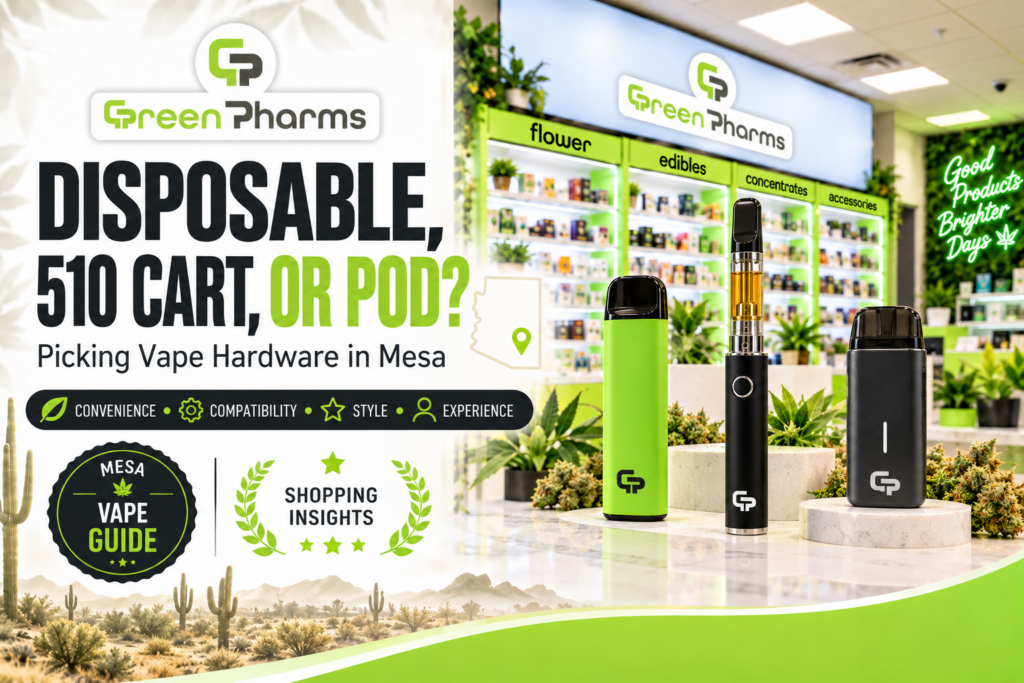
One is sealed plastic you throw away. One is a glass tube with threads on the bottom. One snaps into a battery that fits nothing else. Picking between them matters more than picking a strain, because the hardware decides your cost, your flavor, and whether you are shopping for a battery next month. This guide breaks down all three. If you are still learning the broader menu, our breakdown of cannabis product categories covers everything else in the case.
This article is for adults 21 and over. It is educational only and is not medical advice.
Start with the format most people grab first.
The Disposable Vape
A disposable vape is an all in one vape. Oil, coil, and battery live inside one sealed housing. You charge it, use it, and recycle it.
Nothing screws on. Nothing gets refilled.
That simplicity is the entire appeal. There is no hardware decision to make and no compatibility question to answer. You buy it, and it works.
Disposables also protect the oil well. The housing is sealed, so air exposure stays low until you start using it.
The tradeoff shows up in two places.
First, you pay for a lithium battery every single time. Second, when the coil fails, the whole unit is finished even if oil remains inside.
That second problem gets worse as sizes grow.
Expert Insight
Why the Last Third of a 5g Disposable Tastes Burnt
Budtenders hear this complaint constantly, and it is not a defect. Coils degrade with use. Every heating cycle bakes a little residue onto the wick, and that residue does not come off. On a 0.5g disposable the oil usually runs out before the coil gives up. On a 5g cart, the coil is doing ten times the work inside the same cheap housing, so it often wears out first. The harsh, scorched flavor people report near the end is the coil failing, not bad oil. Peer-reviewed work on thermal degradation of cannabinoids shows that excess heat converts THC into CBN, meaning an overheated device is changing the product you paid for. If you want a large format, spend the money on a refillable battery and buy separate carts instead.
That advice leads straight to the second option.
The 510 Cart and Battery
A 510 cart is a glass cartridge with a threaded base. The number refers to the threading standard, not the size.
The battery is a separate purchase. You buy it once and reuse it.
This is the closest thing to an open standard in cannabis. A 510 cart from one brand will screw onto a 510 battery from another. That interoperability is the whole point.
Most 510 batteries add controls that disposables skip. Variable voltage is the common one. Lower settings protect flavor. Higher settings produce bigger clouds and more heat.
Preheat is the other useful feature. A short low-power burst loosens thick oil before you draw, which matters in a cold room.
The downside is upfront cost and one more thing to keep charged. You also have to actually buy a battery before your cart does anything.
Now the format that sits between the two.
Pod Systems
A pod system uses a weed pod battery paired with pods made by that same brand. The pod slides or snaps in instead of screwing on.
Pods are proprietary by design. A pod from one brand will not fit another brand’s battery.
That lock-in sounds like a drawback, and sometimes it is. It also produces real benefits. The manufacturer controls both halves of the system, so coil resistance and voltage get matched deliberately. Consistency tends to be better than a random cart on a random battery.
Pod systems also seal well and rarely leak.
Just know what you are committing to. Buying the battery means buying that brand’s pods going forward.
Side by Side
Here is how the three types of carts and pens compare.
| Feature | Disposable | 510 Cart + Battery | Pod System |
| Battery included | Yes, single use | No, buy once | No, buy once |
| Cross-brand compatible | N/A | Yes | No |
| Upfront cost | Lowest | Higher | Higher |
| Cost per gram over time | Usually highest | Usually lowest | Middle |
| Voltage control | Rarely | Often | Sometimes |
| Leak resistance | High | Varies | High |
| Waste per gram | Highest | Lowest | Low |
Pricing changes constantly, so run your own math.
How to Compare Cost Per Gram
People ask how much a dispensary cart runs, and the honest answer is that sticker price misleads. Divide instead.
Here is the method. The numbers below are an example only, not a GreenPharms price.
- Find the total price of the product.
- Find the gram weight printed on the package.
- Divide price by grams to get your cost per gram.
- For a 510 cart, add the one-time battery cost to your first purchase only.
- Compare that figure across formats, not across brands.
A $40 one-gram disposable costs $40 per gram. A $30 one-gram 510 cart plus a $20 battery costs $50 the first time and $30 every time after. The 510 setup wins on the second purchase.
That math flips if you only vape occasionally. Buy accordingly.
Checking the Label Before You Buy
Hardware is half the decision. Sourcing is the other half.
Arizona regulates adult-use cannabis through the state health department. Under the Adult Use Marijuana Program, licensed establishments must verify age and make product testing results available before a sale.
That testing requirement is the reason to buy from a licensed shop. The FDA and CDC have both linked serious lung injuries to vaping products obtained from informal sources, including cartridges cut with vitamin E acetate. Licensed Arizona products are tested. Products from a guy in a parking lot are not.
If you are comparing disposable THC vape brands, our Arizona brand guide explains how several common labels relate to each other.
Upkeep and Disposal
Reusable hardware needs a little care. Cleaning a vape pen mostly means cleaning the connection point, not the cart.
Power the battery off. Wipe the threading with a cotton swab and isopropyl alcohol. Let it dry fully before reattaching anything.
Most weak-connection problems come from residue on those threads.
Disposal matters too. Every disposable contains a lithium battery, and the EPA advises that household lithium batteries never go in the trash or curbside recycling, because they pose a fire risk. Take spent devices to a battery collection point.
One last Arizona-specific note. Heat thins vape oil and stresses batteries, so leaving hardware in a parked car is a bad idea. Our post on Arizona heat and cannabis covers that across every product type.
Frequently Asked Questions
Is a disposable vape cheaper than a 510 cart? Disposables are usually cheaper upfront and more expensive per gram over time. A 510 battery is a one-time purchase, so repeat buyers generally spend less. Occasional users often come out ahead with disposables.
Are all 510 carts compatible with all 510 batteries? 510 carts and batteries share a common threading standard, so they generally fit together. Pod systems are different. Pods are proprietary and only work with the matching battery from that same brand.
Is a 5g disposable a better value than a smaller one? Large disposables lower your cost per gram on paper. The coil may wear out before the oil does, which can waste product. A refillable battery with separate carts avoids that risk.
Are dispensary vape products tested in Arizona? Licensed Arizona establishments must make product testing results available before a sale under state rules. Ask to see the data. Products from unlicensed sources carry no such requirement.
Is it safe to throw away a used disposable vape? Used disposables contain lithium batteries and should not go in household trash or curbside recycling. The EPA recommends dropping them at a battery collection or household hazardous waste site.
Conclusion
Three formats, three different tradeoffs. Disposables buy you simplicity. A 510 setup buys you control and a lower cost per gram. A pod system buys you consistency inside one brand’s ecosystem.
Run the per-gram math, decide how often you actually vape, and the right answer gets obvious.
This article is educational and intended for adults 21 and over. It is not medical advice and makes no health claims. Talk with a licensed medical professional about your personal situation before making any health-related decision.
Come See the Hardware in Person
Specs on a website only get you so far. Stop by GreenPharms in Mesa and ask a budtender to show you a disposable, a 510 cart, and a pod side by side. You can browse our Mesa menu online first, or compare product categories if you are still deciding between vaping and something else entirely.